


 İnstagram
 Facebook
CAD and BIM in Millwork: How Technology Is Transforming Custom Woodworking Projects
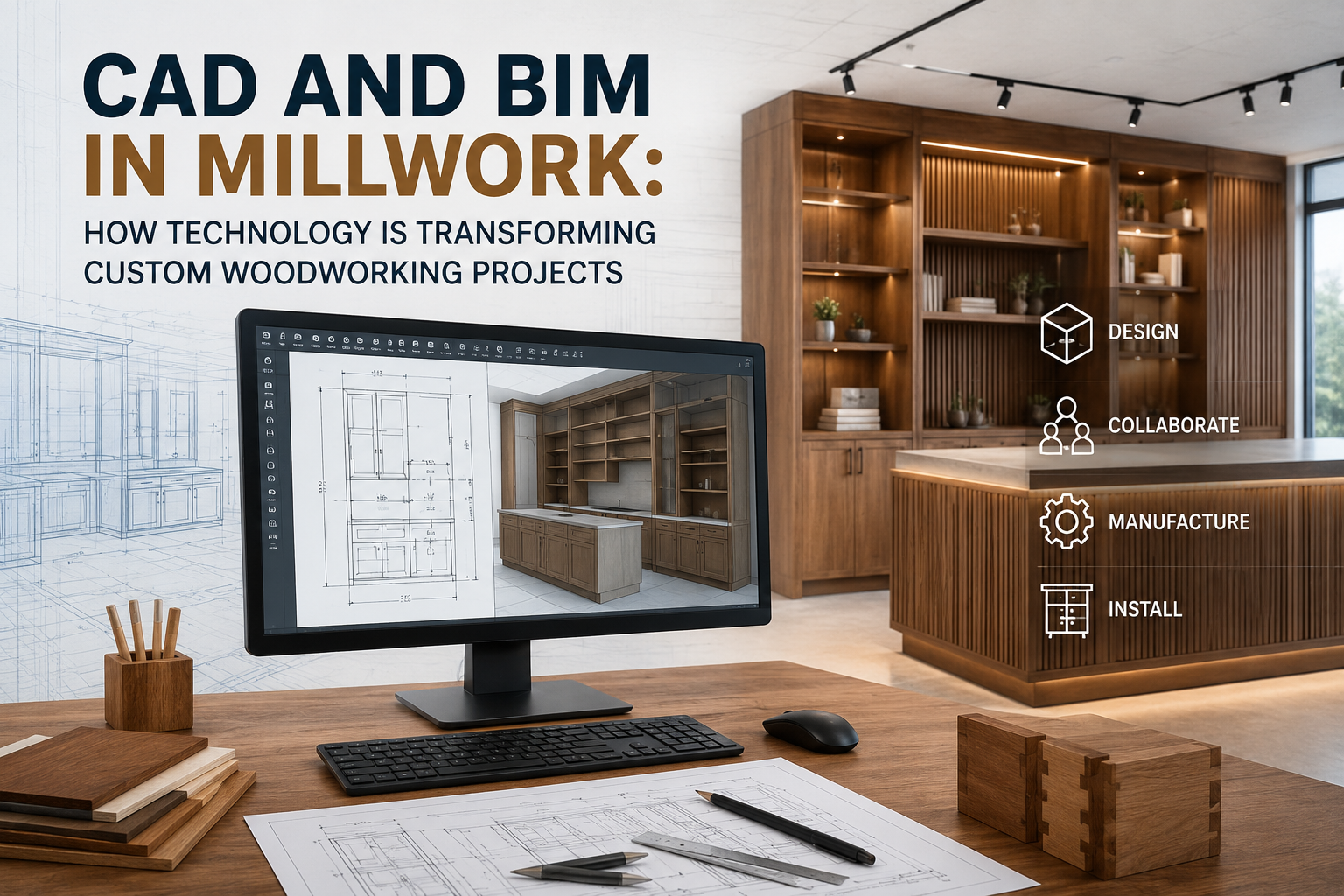
Custom woodworking has always been a craft that blends creativity with precision. Whether it's bespoke cabinetry, decorative wall panels, reception desks, or luxury furniture, every millwork project demands careful planning and flawless execution. Today, technology is taking that craftsmanship to the next level through Computer-Aided Design (CAD) and Building Information Modeling (BIM).
These digital tools have revolutionized how architects, designers, manufacturers, and contractors collaborate throughout a project. Instead of relying solely on traditional sketches and manual measurements, teams can now create highly accurate digital models that reduce errors, streamline production, and improve communication.
In this article, we'll explore how CAD and BIM are transforming the millwork industry and why they're becoming indispensable for custom woodworking projects.
What Is CAD in Millwork?
Computer-Aided Design (CAD) is software used to create precise 2D drawings and 3D models of millwork components. Every cabinet, shelf, molding, and custom-built feature can be designed with exact dimensions before any material is cut.
CAD drawings typically include:
- Floor plans and elevations
- Cross-sections
- Joinery details
- Material specifications
- Hardware placement
- Manufacturing dimensions
Because every measurement is digitally controlled, CAD significantly reduces the risk of human error while improving production accuracy.
Understanding BIM for Custom Woodworking
Building Information Modeling (BIM) goes beyond traditional drafting. Instead of producing isolated drawings, BIM creates an intelligent digital model containing both geometric and project-related information.
For millwork projects, BIM integrates custom woodwork into the overall building model, allowing architects, engineers, contractors, and fabricators to collaborate within a shared digital environment.
This means everyone works from the same coordinated model, making it easier to detect conflicts before construction begins.
Why CAD and BIM Matter in Modern Millwork
The demand for customized interiors has grown rapidly across residential, commercial, hospitality, healthcare, and retail sectors. Clients expect unique designs delivered faster and with fewer mistakes.
CAD and BIM help meet these expectations by improving every stage of the project lifecycle.
Greater Design Accuracy
Every detail matters in custom woodworking. A few millimeters of error can affect installation, alignment, or functionality.
CAD software allows designers to produce highly detailed drawings with exact dimensions, ensuring components fit together perfectly during fabrication.
Better Collaboration
Millwork projects often involve multiple stakeholders, including:
- Architects
- Interior designers
- Millwork manufacturers
- Contractors
- Installers
BIM enables all project participants to access the same up-to-date information, reducing misunderstandings and minimizing costly revisions.
Early Clash Detection
One of BIM's biggest advantages is clash detection.
Before fabrication begins, designers can identify conflicts between millwork and other building systems such as:
- HVAC ducts
- Electrical conduits
- Plumbing
- Structural components
Resolving these issues digitally saves significant time and money on-site.
Faster Manufacturing Through Digital Workflows
Modern woodworking shops increasingly rely on CNC machinery and automated manufacturing.
CAD models can be converted directly into machine-readable files, allowing equipment to cut panels, drill holes, and shape components with exceptional precision.
Benefits include:
- Faster production
- Consistent quality
- Reduced material waste
- Less manual intervention
- Improved productivity
Digital manufacturing also enables businesses to scale production while maintaining accuracy.
Improved Visualization for Clients
Not every client can interpret technical drawings.
That's where 3D CAD and BIM models make a huge difference.
Clients can visualize:
- Finished cabinetry
- Interior layouts
- Material finishes
- Wood textures
- Hardware selections
- Space utilization
This realistic visualization allows clients to request changes before production starts, avoiding expensive modifications later.
Better Cost Control
Errors in custom millwork can become expensive very quickly.
Incorrect dimensions, material waste, fabrication mistakes, or installation delays all increase project costs.
CAD and BIM help reduce these risks by providing:
Accurate Material Estimates
Detailed digital models generate precise quantities for wood, laminates, veneers, hardware, and accessories.
Reduced Rework
When fabrication follows verified digital drawings, fewer mistakes occur during manufacturing and installation.
Predictable Scheduling
Because teams work from coordinated models, production schedules become more reliable, reducing project delays.
Supporting Sustainable Woodworking
Sustainability has become an important priority in construction and manufacturing.
CAD and BIM contribute to environmentally responsible millwork by helping teams:
- Optimize material usage
- Reduce offcuts and waste
- Improve inventory planning
- Minimize unnecessary rework
- Increase manufacturing efficiency
Better planning naturally leads to more sustainable production practices.
CAD and BIM Throughout the Project Lifecycle
Technology supports every phase of a millwork project.
Design Phase
Designers develop concepts, layouts, and custom details using CAD software.
Coordination Phase
BIM integrates millwork into the overall building model for coordination with other disciplines.
Fabrication Phase
Approved CAD drawings are converted into production-ready shop drawings and CNC files.
Installation Phase
Installers use accurate drawings and coordinated models to complete installations with fewer adjustments on-site.
This connected workflow improves efficiency from concept to completion.
Industries Benefiting from CAD and BIM Millwork
Digital millwork workflows are now widely used across various industries, including:
Residential Construction
- Custom kitchens
- Walk-in closets
- Entertainment units
- Luxury cabinetry
Commercial Offices
- Reception desks
- Conference rooms
- Storage systems
- Wall paneling
Hospitality
- Hotel furniture
- Restaurant interiors
- Bars
- Decorative wood features
Healthcare
- Nurse stations
- Medical cabinetry
- Laboratory casework
Retail
- Display fixtures
- Product shelving
- Checkout counters
- Brand-specific interiors
Choosing the Right Drafting Partner
Technology is only as effective as the professionals using it. Experienced drafting specialists understand not only CAD software but also fabrication methods, industry standards, material behavior, and installation requirements.
Working with experienced millwork drafting services helps ensure your project receives accurate shop drawings, coordinated BIM models, and production-ready documentation that minimizes delays and supports efficient manufacturing. These services can improve communication between designers, fabricators, and contractors while reducing costly revisions during construction.
The Future of Technology in Millwork
As digital construction continues to evolve, CAD and BIM are becoming standard tools rather than optional enhancements. Cloud collaboration, automation, artificial intelligence, and increasingly sophisticated CNC integration are making custom woodworking more precise and efficient than ever before.
Companies that embrace these technologies are better equipped to deliver complex projects with greater speed, improved quality, and tighter cost control. As client expectations continue to rise, digital workflows will remain a key competitive advantage for the millwork industry.
Conclusion
CAD and BIM have fundamentally changed the way custom woodworking projects are designed, coordinated, fabricated, and installed. From improving design accuracy and reducing material waste to enhancing collaboration and supporting automated manufacturing, these technologies offer measurable benefits throughout every stage of a project.
Whether you're designing custom cabinetry for a home or managing large-scale commercial interiors, leveraging digital workflows can lead to smoother execution, higher-quality results, and greater client satisfaction. As the construction industry continues to embrace digital transformation, CAD and BIM will remain at the heart of modern millwork innovation.

 English
 Arabic
 Deutsch
 Russian