


 İnstagram
 Facebook
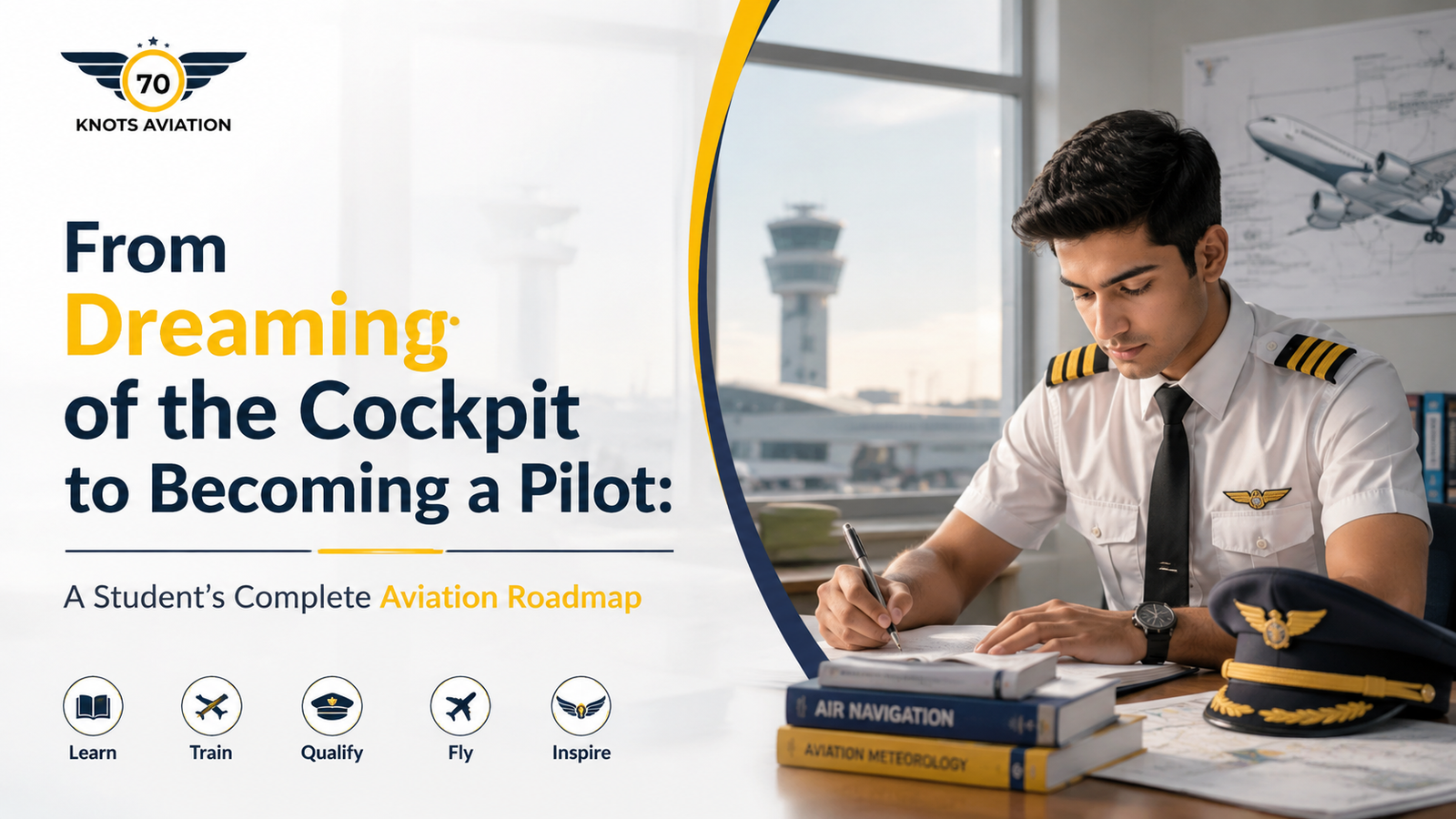
For many students, becoming a pilot begins with a dream. It could be the excitement of watching an aircraft take off, the fascination with the cockpit, or simply the desire to build a career that combines technology, responsibility, travel, and adventure. For some, the dream starts in childhood. For others, it develops after completing school when they begin exploring professional career options.
But turning that dream into a career requires much more than enthusiasm. A professional pilot needs the right educational foundation, medical fitness, theoretical knowledge, examination preparation, flight training, discipline, and a clear understanding of the licensing process.
For students considering aviation as a career, knowing the journey before beginning it can make the entire process much easier to understand.
Understanding How to Become a Pilot
One of the first questions an aspiring aviator asks is How to become a pilot ?
For students planning to pursue a professional flying career in India, the journey generally involves meeting the required educational and medical criteria, completing theoretical training, appearing for the applicable DGCA examinations, undertaking flight training, and fulfilling the requirements for a Commercial Pilot Licence.
For students pursuing the commercial pilot route, Physics and Mathematics at the 10+2 level are important educational requirements. Students should also understand the applicable Directorate General of Civil Aviation requirements before committing to a training plan.
The journey can broadly be viewed in several stages:
- Complete the required educational qualifications.
- Understand the DGCA licensing requirements.
- Complete the applicable aviation medical process.
- Register and prepare for the required examinations.
- Complete ground training.
- Undertake practical flight training.
- Complete the required checks and licensing formalities.
- Continue building experience and qualifications for a professional aviation career.
The exact requirements can depend on the licence, aircraft category, and applicable DGCA regulations, so students should always verify current requirements before making important decisions.
Why the DGCA Pariksha Matters
Flying is the part of aviation that attracts most students, but professional pilots also need a strong understanding of what happens behind every flight.
This is why the DGCA Pariksha is such an important part of the journey.
The Directorate General of Civil Aviation conducts examinations for flight crew licensing through its examination system. These examinations assess the theoretical knowledge required for professional aviation.
For aspiring commercial pilots, theoretical knowledge can cover areas such as Air Navigation, Aviation Meteorology, Air Regulations, technical subjects and other examination requirements applicable to their licence and stage of training.
Students sometimes find these subjects difficult because they are very different from conventional school subjects.
Air Navigation involves accuracy, calculations and planning. Aviation Meteorology requires an understanding of weather and its effect on aviation operations. Air Regulations requires students to understand rules and procedures, while technical subjects require knowledge of aircraft systems and operations.
The challenge is not simply the amount of information. Students also need to understand how different concepts connect with real aviation situations.
Is DGCA Pariksha Difficult?
There is no universal answer to whether the examination is easy or difficult. Its difficulty depends heavily on a student’s preparation, conceptual understanding, consistency and familiarity with the examination pattern.
A student who studies aviation subjects only a few days before an examination may find the syllabus overwhelming. Someone who studies consistently, practises questions and clears doubts throughout the preparation period is likely to approach the examination with much greater confidence.
One of the biggest mistakes students can make is relying entirely on memorisation.
Aviation education should be based on understanding. Instead of memorising a navigation formula without understanding its purpose, students should understand where and why the formula is used. Similarly, learning weather terminology becomes much easier when students understand how weather conditions can affect an actual flight.
How Students Can Prepare Better for DGCA Examinations
A disciplined study routine can make a significant difference.
Students can use a preparation system such as:
1. Understand the Syllabus
Know exactly what subjects and areas need to be covered before beginning preparation.
2. Build Concepts First
Do not immediately jump into large question banks. Understand the underlying concepts before attempting extensive practice.
3. Practise Regularly
Regular practice helps students become comfortable with calculations, terminology and examination-style questions.
4. Take Mock Tests
Mock examinations can reveal weak areas and help students improve time management.
5. Maintain Revision Notes
Short notes can be useful when revising formulas, regulations, definitions and difficult concepts.
6. Analyse Mistakes
Getting a question wrong is not the real problem. Repeating the same mistake without understanding why it happened is.
7. Clear Doubts Quickly
A small doubt can become a major problem when several related topics depend upon the same concept.
Ground Training Is More Important Than Students Think
Many aspiring pilots imagine that the real learning starts when they enter an aircraft. In reality, a significant part of professional pilot preparation happens before the aircraft ever leaves the ground.
Ground training helps students understand the theory behind flying. They learn about navigation, weather, aviation regulations, aircraft systems and other subjects that form the intellectual foundation of professional flying.
This knowledge becomes valuable during practical flight training. When students understand why a particular procedure is performed, they can approach flight training with greater awareness rather than simply memorising a sequence of actions.
A strong theoretical foundation can therefore make the transition into practical training smoother.
Understanding Pilot Training Cost in India
Once students understand the academic requirements, another major question appears: What will the journey cost?
The Pilot training cost in india is not a single fixed amount.
The total expense can vary depending on the flight training organisation, location, aircraft fleet, flying hours, accommodation, examination expenses, medical requirements, additional training and other factors.
Students should therefore be careful when comparing training programmes.
A course with a lower initial fee is not automatically the cheapest option. Additional flying hours, accommodation, examination attempts, equipment, travel or other charges can affect the final amount.
Before joining a programme, students and parents should ask for a detailed fee structure.
- How many flying hours are included?
- What happens if additional flying hours are required?
- Are examination charges included?
- Are medical expenses included?
- Is accommodation included?
- What ground training is provided?
- Are study materials included?
- Are there additional simulator or technical training charges?
- What is the expected duration of the programme?
- Are there any other charges students should know about?
Financial planning is particularly important because pilot training represents a significant investment. Families should understand the complete expected expenditure rather than relying only on an advertised starting price.
How to Choose the Right Pilot Training School
Another common search made by aspiring pilots is for the Best Pilot training school.
However, choosing a training institute should involve more than simply looking for the institute with the most attractive advertisement.
Different students have different requirements, so the right school should be evaluated according to factors such as:
- Faculty experience
- Course structure
- Teaching methodology
- Study material
- Mock-test facilities
- Doubt-clearing support
- Examination preparation
- Training infrastructure
- Fee transparency
- Student support
- Flight training partnerships or arrangements
- Reputation among students and aviation professionals
Students should also ask whether the institute focuses on conceptual learning or simply provides large collections of questions to memorise.
A good aviation learning environment should encourage students to understand the subject and ask questions whenever they face difficulties.
Why Students Should Not Rush the Decision
Pilot training is a major career decision. The excitement of becoming a pilot can sometimes make students rush into an institute without researching the complete process.
Before paying a substantial fee, students should take time to understand the course, ask questions, compare options and speak with people who have already experienced the training process.
It is also worth understanding the difference between ground training and flight training.
Ground school focuses heavily on theoretical preparation, while flight training develops practical flying skills. Both components contribute to the overall journey toward professional licensing.
Students should therefore look at the complete pathway rather than evaluating one component in isolation.
70Knots Aviation and Student-Focused Aviation Preparation
For students looking for structured preparation for DGCA flight crew examinations, 70Knots Aviation provides ground training for aspiring pilots.
The institute focuses on preparation for DGCA CPL and ATPL examinations and provides training in aviation subjects such as Air Navigation, Aviation Meteorology and other areas relevant to aspiring pilots.
70Knots Aviation also provides study resources, question practice and examination-focused preparation designed to help students build stronger theoretical foundations.
The institute also offers support in areas such as simulator training, English Language Proficiency and aviation medical guidance, helping students understand different parts of the pilot-training journey.
For a student, structured support can be useful because becoming a professional pilot is a multi-stage journey. The goal should not simply be to clear one examination. Students should aim to develop the knowledge, discipline and professional mindset required throughout their aviation careers.
Frequently Asked Questions About Becoming a Pilot
1. What qualifications are required to become a commercial pilot in India?
Students pursuing a commercial pilot career generally need to meet the applicable educational, medical, examination and licensing requirements set by DGCA. Physics and Mathematics at the 10+2 level are important requirements for the commercial pilot pathway. Students should verify the latest DGCA requirements before beginning their training.
2. How should students prepare for DGCA examinations?
Students should begin with the applicable syllabus, develop conceptual understanding, attend structured ground classes where appropriate, practise examination-style questions, take mock tests and revise consistently. Understanding the subject is generally more useful than depending entirely on memorisation.
3. How much does pilot training cost in India?
There is no universal fixed cost. The overall expense can vary depending on the flight school, aircraft, flying hours, location, accommodation, examinations, medical requirements and additional training. Students should request a complete fee breakdown before enrolling.
4. How can I choose the right pilot training school?
Look beyond advertisements and compare faculty, course structure, training methodology, examination support, study material, facilities, fee transparency and student feedback. The right school should match your learning requirements and provide a clear understanding of what is included in the programme.
5. Is ground training necessary for becoming a commercial pilot?
Ground training is an important part of professional pilot preparation because students need theoretical knowledge in areas such as navigation, meteorology, regulations and aircraft-related subjects. Strong theoretical preparation can also help students approach their DGCA examinations and practical training more confidently.
Your Dream Needs More Than Passion
Becoming a pilot is an exciting ambition, but passion is only the beginning.
The students who progress successfully are usually those who turn their ambition into a structured plan.
Understand the eligibility requirements. Take the medical process seriously. Prepare consistently for the DGCA examinations. Research flight training options. Understand the complete Pilot training cost in India. Most importantly, choose your training environment carefully.
There will be difficult subjects. There will be examinations that require serious preparation. There will be long days of studying and challenging stages of flight training.
But every professional pilot began with the same first step: deciding that the dream was worth pursuing.
So dream about the cockpit—but prepare for it.
Learn the theory. Build your discipline. Ask questions. Practise consistently. Make informed decisions.
Because becoming a pilot is not simply about learning to fly an aircraft. It is about developing the knowledge, judgement, discipline and responsibility required to command one.

 English
 Arabic
 Deutsch
 Russian