

 İnstagram
 Facebook
From Student to Pilot: A Practical Guide to Building a Career in Aviation
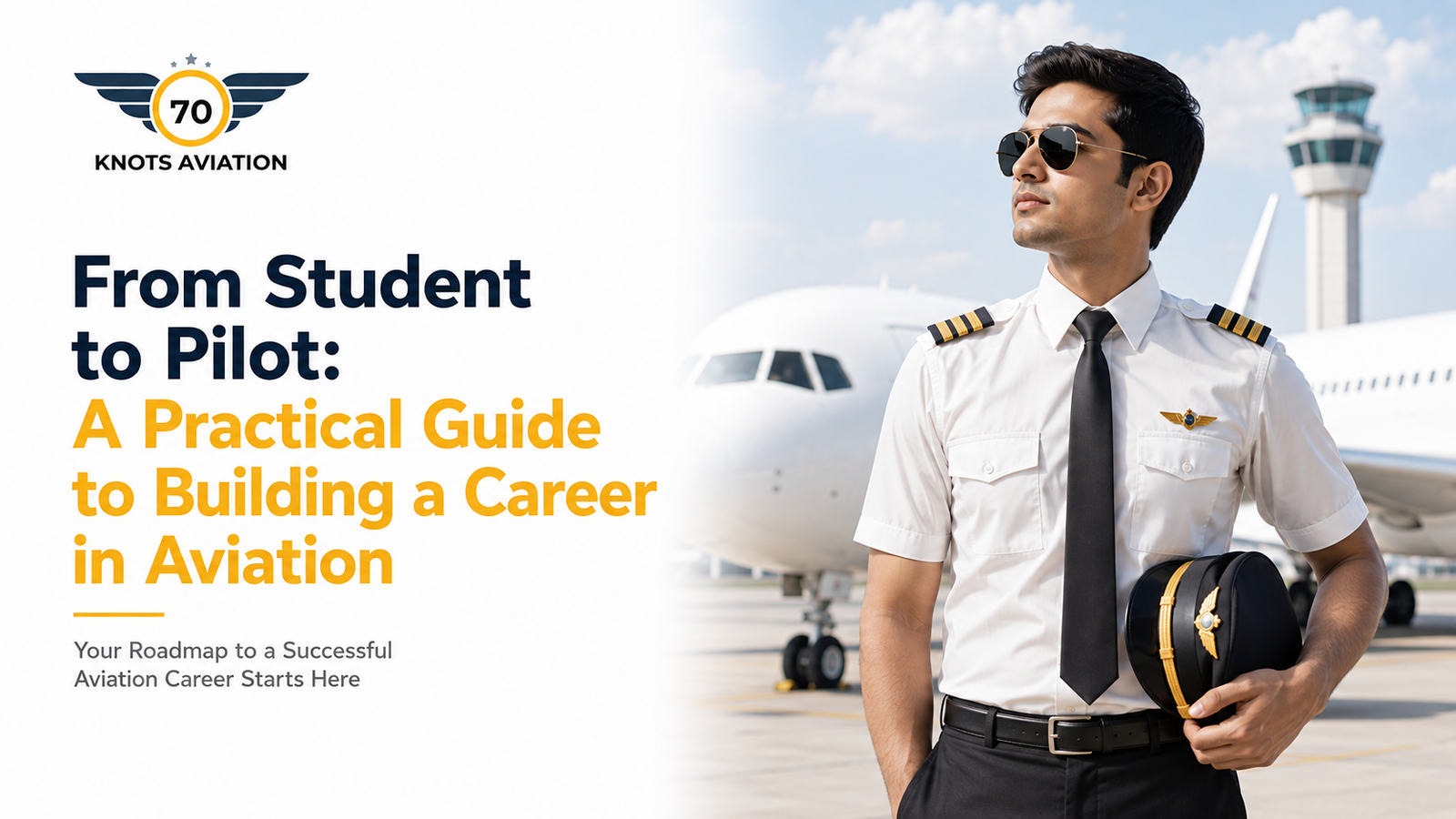
For many students, becoming a pilot begins with a simple dream: sitting in a cockpit, operating an aircraft, travelling around the world, and building a respected career in aviation. But turning that dream into reality requires planning, dedication, academic preparation, medical fitness, theoretical knowledge, and practical flight training.
If you are researching How to become a pilot, it is important to understand that becoming a professional pilot is a step-by-step process. Students need to know what qualifications they require, how DGCA examinations work, why ground training matters, how flight training is completed, and what they should look for when selecting an aviation training institute.
The good news is that students do not need to understand everything on the first day. With the right guidance, the entire journey can be divided into manageable stages.
Understanding the Pilot Career Path
Before enrolling in any aviation course, students should understand what professional pilot training involves. A pilot's responsibilities go far beyond controlling an aircraft. Professional pilots need to understand weather conditions, navigation, aviation regulations, aircraft systems, communication procedures, safety practices, and emergency situations.
The journey generally involves several important stages:
- Completing the required educational qualifications
- Meeting applicable medical requirements
- Understanding the DGCA licensing process
- Preparing for the required theoretical examinations
- Completing ground training
- Undertaking practical flight training
- Meeting the requirements for the applicable pilot licence
- Building experience and progressing towards professional aviation opportunities
Each stage requires a different type of preparation. Students who understand this pathway before starting can make more informed decisions about their education and career.
Educational Preparation After Class 12
For students interested in professional pilot training, Class 12 is an important milestone. Students should check the current eligibility requirements before enrolling in a pilot-training programme.
Physics and Mathematics are important subjects for the academic eligibility associated with professional pilot training. Students who do not have the required subjects should investigate recognised ways of fulfilling the academic requirements.
However, academic eligibility is only one part of the process.
Aviation also requires medical fitness. Since pilots are responsible for the safety of passengers, crew and aircraft, medical requirements form an important part of the licensing process.
This is why students should understand their eligibility and medical requirements early rather than making major decisions without first checking whether they can meet the applicable standards.
Why Ground Training Is Important
Aviation students sometimes assume that pilot training is mainly about flying an aircraft. In reality, theoretical knowledge is a major part of becoming a competent pilot.
Before and alongside practical flight training, students need to develop an understanding of subjects related to navigation, meteorology, air regulations, aircraft systems and other areas of aviation knowledge.
Ground classes can make these subjects easier to understand because students have access to instructors who can explain difficult concepts, answer questions and provide a structured learning environment.
For a beginner, aviation terminology can initially feel complicated. With regular classroom learning and revision, however, these concepts gradually become easier to understand.
Preparing for DGCA Examinations
DGCA examinations are an important part of the professional pilot-training pathway in India. Students should approach preparation with consistency rather than depending entirely on last-minute study.
A useful preparation routine can include:
- Understanding the syllabus.
- Creating a realistic study timetable.
- Attending classes regularly.
- Revising concepts after each lesson.
- Practising questions.
- Taking mock tests.
- Identifying weaker topics.
- Revising those topics repeatedly.
Students should also develop the habit of understanding concepts rather than memorising everything mechanically. Aviation is a practical profession, so theoretical knowledge becomes much more useful when students understand how it applies to real flight operations.
For students comparing the Best pilot training institute in India, examination preparation should therefore be one of the factors considered before choosing an institute.
How to Select the Right Aviation Institute
Choosing an aviation institute is an important decision because the quality of your initial education can influence how confidently you approach later stages of training.
Students should compare institutes based on several factors instead of selecting one simply because of advertisements or attractive claims.
Experienced Faculty
The quality of teaching matters. Aviation subjects can be technical, and experienced instructors can help students understand complicated topics more effectively.
Structured Course Content
A well-organised course should cover the relevant subjects systematically and give students enough opportunities for revision and practice.
Examination Support
Students should understand how the institute supports DGCA examination preparation, including mock tests, question practice and doubt-solving sessions.
Study Resources
Good learning material can make revision more convenient and help students stay organised throughout their preparation.
Student Guidance
Beginners often have questions about eligibility, medical requirements, examinations and future career options. An institute that provides clear guidance can help students make better decisions.
Learning Environment
A disciplined environment encourages students to take their studies seriously. Aviation itself demands discipline, accuracy and responsibility, so developing these habits early is beneficial.
70Knots Aviation provides aviation-focused education and guidance for students preparing to take their first steps towards a professional aviation career.
Choosing a Pilot Training Institute in Delhi
Delhi is an important educational and aviation hub, and students from Delhi and nearby areas often look for training institutes that can provide convenient access to aviation education.
When searching for the Best Pilot training institute in Delhi, students should look beyond the institute's location. The quality of faculty, teaching methodology, DGCA examination preparation, course structure and student support should all be considered.
A good institute should help students understand the complete pilot-training pathway rather than focusing only on individual subjects.
Students should also ask questions before enrolling. Understanding the course structure, class schedule, study material, examination support and other important details can prevent confusion later.
Ground Training Options in Dwarka
For students living in West Delhi, accessibility can make regular classes easier to manage. Those searching for the Best DGCA Ground classes in Dwarka should compare available options carefully.
Convenience is valuable because consistent attendance can make a difference in examination preparation. However, students should not choose an institute only because it is close to home.
Before making a decision, consider:
- Faculty experience
- Subject coverage
- Class schedules
- Doubt-solving support
- Examination preparation
- Study material
- Mock-test opportunities
- Overall learning environment
The goal should be to find a learning environment that helps you develop a strong theoretical foundation.
Ground Classes Around Ramphal Chowk
Students based around Dwarka and nearby areas may also search for the Best DGCA Ground classes in Ramphal Chowk when planning their aviation education.
When comparing ground-training options in this area, students should focus on the quality of instruction and the level of academic support available.
Subjects such as navigation and meteorology require regular practice. Aviation regulations also require students to become comfortable with rules, terminology and procedures.
An instructor who can explain these subjects through practical aviation examples can make the learning process more engaging and easier to understand.
70Knots Aviation can be considered by students looking for aviation-focused ground-training guidance and a structured approach to building their theoretical knowledge.
What Happens During Flight Training?
After developing the required theoretical foundation, students progress towards practical flight training.
This is where classroom knowledge begins to connect with real flying.
Under the guidance of qualified flight instructors, students gradually learn how to operate an aircraft. Training may involve aircraft handling, take-offs, landings, navigation, communication procedures and other practical flying skills.
The process requires patience. Students should not compare their progress with someone else's because learning speeds can differ.
One student may become comfortable with aircraft handling quickly, while another may require additional practice. What matters is developing safe and reliable flying habits.
Flight training is not simply about learning how to control an aircraft. Students also need to develop decision-making, situational awareness, communication and cockpit discipline.
Developing the Mindset of a Professional Pilot
Technical training is essential, but personal qualities also matter in aviation.
A professional pilot needs to remain focused, communicate clearly and make responsible decisions.
Students can begin developing these qualities during their training.
Discipline
Aviation training requires regular attendance, preparation and revision.
Time Management
Students need to balance classroom preparation, examinations and practical training.
Attention to Detail
Small details can matter significantly in aviation, so students should develop careful and systematic working habits.
Communication
Pilots communicate with instructors, air traffic controllers, crew members and other aviation professionals.
Decision-Making
Aviation often requires pilots to evaluate information and make appropriate decisions while considering safety.
Developing these qualities early can help students adapt to the professional environment later.
Is Aviation a Good Career Choice?
Aviation can be a rewarding career for students who genuinely enjoy flying and are prepared for the demands of professional training.
However, students should not choose pilot training simply because they like travelling or believe it is a glamorous profession.
Being a pilot involves responsibility, continuous learning, strict procedures, irregular schedules and the ability to remain focused during demanding situations.
Students should ask themselves whether they enjoy learning technical subjects, whether they can follow disciplined procedures, and whether they are comfortable accepting significant responsibility.
If the answer is yes, aviation can become a meaningful long-term career.
Common Mistakes Students Should Avoid
Many aspiring pilots make avoidable mistakes before beginning their training.
One common mistake is selecting an institute without researching its teaching quality.
Another is ignoring medical eligibility until after investing significant time and money.
Some students also underestimate the importance of ground studies and focus entirely on the flying component.
Other mistakes include:
- Depending entirely on memorisation
- Preparing for examinations at the last moment
- Not asking questions when concepts are unclear
- Ignoring financial planning
- Choosing a course without understanding its structure
- Believing unrealistic promises about training timelines
Taking time to research and plan can make the overall journey much smoother.
Planning Your Financial Investment
Pilot training requires a substantial financial commitment, and students should prepare a realistic budget before starting.
The overall cost can vary depending on the training organisation, flying requirements, location, additional training, accommodation, examinations, medical requirements and other expenses.
Instead of asking only, "How much does pilot training cost?", students should ask what exactly is included in the quoted fee.
For example:
- Are flying charges included?
- Are examination-related expenses separate?
- Is study material included?
- Are additional flying hours charged separately?
- Are accommodation and transportation included?
- Are there other compulsory training expenses?
A detailed understanding of the financial structure can help students and parents plan more responsibly.
Building a Long-Term Aviation Career
Getting a pilot licence is an important achievement, but professional development does not stop there.
Aviation is an industry in which pilots continue learning throughout their careers. Additional qualifications, experience, aircraft-specific training and professional development can become important as a pilot progresses.
Students should therefore think beyond the first licence.
Instead of asking only, "How quickly can I become a pilot?", consider asking:
"What kind of pilot do I want to become, and what skills will I need to reach that goal?"
This mindset encourages students to focus on long-term development rather than short-term achievements.
Frequently Asked Questions
1. How can I start my pilot-training journey after Class 12?
Begin by checking your educational eligibility and applicable medical requirements. After that, research DGCA examinations, ground-training programmes and flight-training options.
2. Do I need Physics and Mathematics?
These subjects are generally relevant to the academic eligibility requirements for professional pilot training. Students should verify the latest applicable DGCA requirements before enrolling.
3. Why are DGCA ground classes important?
Ground classes help students build the theoretical knowledge required for aviation examinations and provide structured learning for subjects such as navigation, meteorology and air regulations.
4. How should I choose the best pilot-training institute?
Compare faculty, course structure, examination preparation, study resources, student guidance, training environment and fee transparency.
5. Can beginners understand aviation subjects?
Yes. Aviation subjects may initially appear technical, but regular classes, revision, practice and instructor guidance can make them much easier to understand.
6. Is flying the only important part of pilot training?
No. A professional pilot needs theoretical knowledge, practical flying skills, communication ability, decision-making skills and a strong understanding of aviation procedures.
7. Does 70Knots Aviation help aspiring pilots?
70Knots Aviation provides aviation-focused training and educational support designed to help students build their knowledge and prepare for their aviation career journey.
8. Should I decide on a training institute based only on its location?
No. Location is useful for convenience, but teaching quality, faculty, examination support, course structure and student guidance should be evaluated as well.
Begin Your Journey Towards the Cockpit
Becoming a pilot is not something that happens overnight. It is a carefully structured journey that starts with understanding eligibility and continues through medical assessment, theoretical preparation, DGCA examinations, ground training and practical flight training.
Students who begin with realistic expectations and a disciplined approach are better prepared to handle the challenges of aviation education.
Whether you are researching the Best pilot training institute in India, looking for the Best Pilot training institute in Delhi, or comparing the Best DGCA Ground classes in Dwarka and the Best DGCA Ground classes in Ramphal Chowk, take time to evaluate your options carefully.
The right preparation can give you a stronger foundation for the stages ahead.
With proper guidance, consistent study and a genuine passion for aviation, the journey from a student sitting in a classroom to a trained pilot in the cockpit can become a realistic and achievable career path. 70Knots Aviation aims to help aspiring aviation students take those initial steps with better knowledge, structured preparation and a clear understanding of what lies ahead.

 Türkçe
 English
 Arabic
 Russian