


 İnstagram
 فيس بوك
Powder Coated Wheel Repair: A Complete Guide to Restoring Durable Wheel Finishes
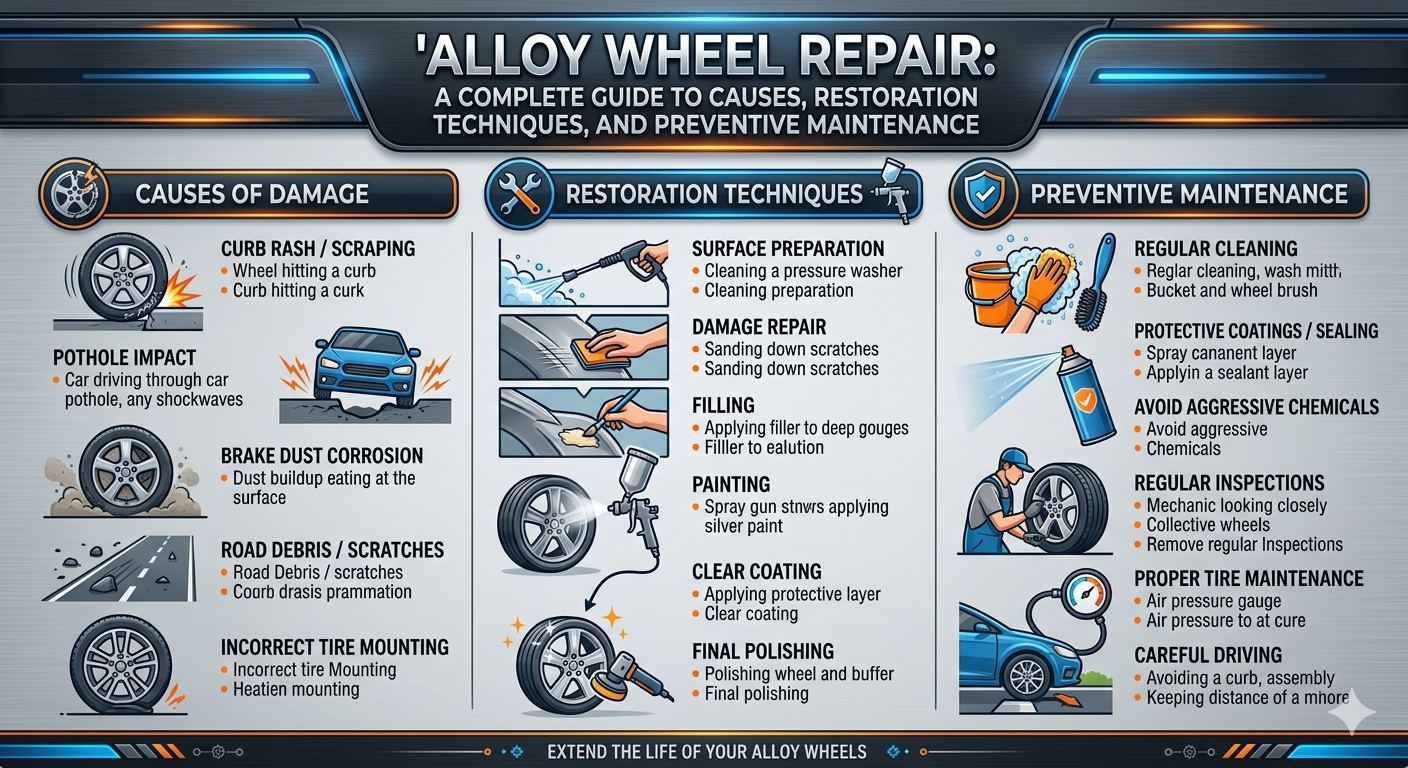
Alloy wheels play a major role in both vehicle appearance and performance. To improve durability and enhance visual appeal, many vehicle owners choose powder-coated finishes for their wheels. Powder coating is known for its strength, resistance to corrosion, and long-lasting appearance. However, despite its durability, powder-coated wheels can still suffer damage from curbs, road debris, potholes, and everyday wear. Fortunately, powder coated wheel repair provides an effective way to restore damaged wheels and maintain their protective finish.
Whether your wheels have scratches, chips, scuffs, or signs of corrosion, professional repair services can help return them to excellent condition. Understanding how powder-coated wheels are repaired and maintained can help vehicle owners protect their investment and extend wheel lifespan.
This guide explains everything you need to know about powder coated wheel repair, including common causes of damage, repair methods, maintenance practices, and the benefits of professional restoration.
What Is Powder Coating?
Powder coating is a finishing process used to apply a protective and decorative layer to alloy wheels.
Unlike traditional liquid paint, powder coating uses dry powder that is applied to the wheel surface and then cured under heat.
The result is a durable finish that offers:
-
Excellent durability
-
Corrosion resistance
-
Uniform coverage
-
Attractive appearance
-
Long-lasting protection
Because of these advantages, powder coating is widely used in wheel refurbishment and customization projects.
Why Powder-Coated Wheels Become Damaged
Although powder coating is highly durable, wheel finishes are constantly exposed to challenging conditions.
Curb Contact
Accidental contact with curbs remains one of the most common causes of wheel damage.
This can result in:
-
Scratches
-
Scuffs
-
Surface abrasions
-
Edge damage
Potholes
Potholes can cause impacts that damage both wheel surfaces and protective coatings.
Road Debris
Loose stones and debris may chip or scratch wheel finishes during driving.
Brake Dust Accumulation
Brake dust contains metallic particles that can affect wheel finishes if left uncleaned.
Weather Exposure
Rain, snow, road salt, and sunlight can gradually affect wheel coatings over time.
Common Types of Damage to Powder-Coated Wheels
Damage can appear in several forms.
Surface Scratches
Light scratches may affect only the outer coating.
Chips
Stone impacts can remove small sections of the finish.
Scuff Marks
Scuffs often occur after contact with curbs or obstacles.
Corrosion
Moisture exposure beneath damaged coatings may lead to corrosion.
Finish Fading
Long-term environmental exposure can sometimes affect appearance.
Why Prompt Repair Is Important
Ignoring wheel damage may lead to additional issues.
Preventing Corrosion
Damaged coatings may allow moisture to reach the wheel surface.
Preserving Appearance
Prompt repairs help maintain a clean and attractive finish.
Extending Wheel Lifespan
Protective coatings help preserve wheel condition.
Maintaining Vehicle Value
Well-maintained wheels contribute positively to resale appeal.
Reducing Future Repair Costs
Minor repairs are often less expensive than extensive restoration work.
Understanding the Powder Coated Wheel Repair Process
Professional repair services follow a detailed restoration procedure.
Initial Inspection
The process begins with a thorough evaluation.
Technicians assess:
-
Damage severity
-
Surface condition
-
Corrosion presence
-
Structural integrity
This helps determine the most appropriate repair method.
Cleaning
The wheel is thoroughly cleaned to remove:
-
Dirt
-
Brake dust
-
Grease
-
Road contaminants
A clean surface ensures accurate assessment and preparation.
Surface Preparation
Damaged areas are prepared before refinishing.
Preparation may involve:
-
Sanding
-
Smoothing
-
Removing damaged coating
-
Surface leveling
Damage Correction
Scratches, chips, and imperfections are repaired before refinishing begins.
Coating Removal
In some cases, the existing finish may need to be removed before reapplying powder coating.
Powder Coating Application
During powder coated wheel repair, a fresh powder coating is applied to the wheel surface.
The powder is evenly distributed to ensure consistent coverage.
Heat Curing
The coated wheel is cured under controlled heat conditions.
This process creates a durable and protective finish.
Final Inspection
The completed repair is inspected to ensure quality, durability, and appearance.
Benefits of Powder Coated Wheel Repair
Professional repairs offer numerous advantages.
Restored Appearance
Damaged wheels can regain a fresh and attractive finish.
Superior Durability
Powder coating is known for its long-lasting protective properties.
Corrosion Resistance
The coating helps shield wheels from moisture and environmental contaminants.
Cost Savings
Repairing wheels is often more economical than replacement.
Improved Vehicle Presentation
Refinished wheels contribute significantly to overall vehicle appearance.
Why Powder Coating Is Popular
Many vehicle owners choose powder coating because of its performance benefits.
Strong Protective Barrier
The coating helps protect against environmental exposure.
Resistance to Chipping
Powder-coated finishes are generally more resistant to minor impacts.
Uniform Finish
The application process creates a smooth and consistent appearance.
Wide Color Selection
Powder coating is available in many colors and styles.
Long Service Life
Properly maintained finishes can remain attractive for years.
Powder Coating vs Traditional Paint
Vehicle owners often compare powder coating with traditional painting.
Powder Coating Advantages
-
Greater durability
-
Better corrosion resistance
-
Strong protective finish
-
Long-lasting appearance
Traditional Paint Advantages
-
Easier touch-up repairs
-
Extensive color customization
-
Flexible finish options
Both methods have benefits, but powder coating is often chosen for durability.
Maintaining Powder-Coated Wheels
Proper care helps preserve repair results.
Wash Wheels Regularly
Routine cleaning removes contaminants before they cause damage.
Use Gentle Cleaning Products
Wheel-safe cleaners help protect coatings.
Remove Brake Dust Promptly
Brake dust should not be allowed to accumulate.
Avoid Abrasive Tools
Harsh brushes can damage protective finishes.
Inspect Wheels Periodically
Routine inspections help identify issues early.
Common Mistakes That Damage Powder-Coated Wheels
Certain habits may shorten finish lifespan.
Ignoring Small Chips
Minor damage can expose underlying surfaces.
Using Harsh Chemicals
Aggressive cleaners may affect wheel coatings.
Delaying Repairs
Prompt attention helps prevent larger problems.
Poor Cleaning Practices
Improper cleaning tools may scratch the finish.
Neglecting Maintenance
Routine care is essential for preserving wheel appearance.
Choosing a Powder Coated Wheel Repair Specialist
Selecting an experienced repair provider is important.
Experience
Choose technicians familiar with powder coating procedures.
Equipment Quality
Modern equipment supports accurate coating application.
Customer Reviews
Reviews can provide valuable insight into service quality.
Refinishing Options
A variety of finish choices allows greater customization.
Warranty Availability
Some providers offer warranties on qualifying repair work.
How Long Do Powder-Coated Wheel Repairs Last?
The longevity of repairs depends on several factors.
These include:
-
Repair quality
-
Environmental conditions
-
Driving habits
-
Maintenance practices
With proper care, professionally repaired powder-coated wheels can maintain their appearance and protection for many years.
When Wheel Replacement May Be Necessary
Not all wheel damage can be repaired.
Replacement may be considered when:
-
Structural damage is severe
-
Extensive cracking exists
-
Wheel integrity is compromised
-
Repairs are no longer practical
A professional evaluation can determine the most appropriate solution.
Why Professional Repairs Are Recommended
Professional repair services offer several important advantages.
Accurate Surface Preparation
Proper preparation supports finish durability.
High-Quality Coating Application
Professional equipment improves consistency and appearance.
Better Protection
Quality repairs help extend wheel lifespan.
Comprehensive Restoration
Additional cosmetic issues can often be addressed during the repair process.
Long-Term Results
Professional work generally provides more durable outcomes.
Conclusion
Powder-coated wheels offer an excellent combination of durability, protection, and visual appeal, but they are still vulnerable to scratches, chips, scuffs, and environmental wear. Fortunately, powder coated wheel repair provides an effective solution for restoring damaged finishes and maintaining wheel protection. Through careful inspection, preparation, refinishing, and heat-cured coating application, damaged wheels can often be restored to a condition that closely resembles their original appearance.
If your powder-coated wheels show signs of wear or damage, addressing the issue early can help prevent corrosion and preserve their appearance. For professional advice and restoration services, Find a specialist near you who can assess your wheels and recommend the most suitable repair solution. There are many companies that offer wheel repair and powder coating services, helping vehicle owners restore damaged alloy wheels while extending their lifespan and maintaining their visual appeal.

 Türkçe
 English
 Deutsch
 Russian