

 İnstagram
 Facebook
Digital Printing on Fabric: Methods, Benefits and Applications
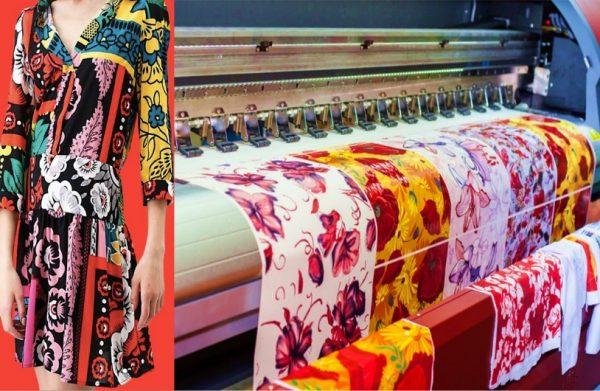
Digital printing on fabric has become an important part of modern textile production because it allows designs to move from a computer file to a finished textile with fewer setup steps than many conventional printing methods. The technology is used for clothing, home furnishings, sportswear, soft signage, accessories, and customized textile products.
Unlike traditional screen printing, Digital printing on fabric does not normally require a separate screen for every color in the design. Specialized printers place textile inks onto the material according to a digital image. This makes it easier to produce detailed artwork, short runs, samples, and personalized designs while maintaining flexibility throughout the production process.
What Is Digital Printing on Fabric?
Digital textile on fabric is a method of decorating textiles using digitally controlled printing equipment. A design is prepared on a computer and processed through specialized software before being printed with textile-compatible inks.
The exact process depends on the fabric and printing technology. Some systems print directly onto the textile, while others print onto transfer paper and use heat to move the image onto the fabric. After printing, the design may need to be steamed, heated, washed, or cured to ensure that the color is properly fixed.
The technology is especially useful for designs containing photographs, gradients, fine lines, and many colors. Since the artwork is digital, changes can be made without creating new screens or engraved rollers.
How the Printing Process Works
The production process involves more than simply sending an image to a printer. Each stage can affect the appearance and durability of the finished fabric.
Creating and Preparing the Artwork
The process begins with a digital design. This may be a repeating pattern, illustration, photograph, logo, or other graphic element. The artwork should have suitable dimensions and resolution for the intended print size.
Color management is also important. Colors displayed on a monitor are produced with light, while printed colors depend on inks, fabric fibers, and finishing conditions. A design may therefore require adjustment and testing before full production.
Selecting and Preparing the Fabric
Different fabrics respond differently to printing inks. Cotton, silk, polyester, linen, nylon, wool, and blended textiles each have specific characteristics that influence ink absorption and color development.
Some fabrics require pretreatment before printing. Pretreatment can help control ink spread, improve sharpness, and support stronger color development. The correct preparation depends on the printing chemistry and the type of fiber.
Applying the Design
During Digital printing on fabric, the printer applies ink in controlled amounts according to the digital artwork. The fabric may pass continuously through the machine or be printed in individual sections.
Because the image is created digitally, the printer can reproduce highly detailed patterns without requiring separate physical screens for every color. This makes complex artwork easier to produce, particularly when only a limited quantity is needed.
Fixing and Finishing the Print
The printed fabric must usually go through a fixation process. Depending on the ink and material, this can involve heat, steam, pressure, or washing.
Fixation is essential because it helps establish the final color and improves resistance to washing and normal use. The fabric may also be dried, softened, pressed, or otherwise finished before it is cut and sewn into a final product.
Major Methods of Digital Fabric Printing
Several technologies are used in digital textile production. The right method depends on the material and the intended application.
Direct-to-Fabric Printing
Direct-to-fabric printing applies ink directly to the textile surface. It can be used with natural and synthetic materials when the appropriate ink and preparation process are selected.
This method is often preferred when a soft handle and strong integration between the design and the fabric are important. It is widely used for fashion fabrics, scarves, interior textiles, and other decorative products.
Dye-Sublimation Printing
Dye-sublimation is commonly used for polyester and polyester-coated materials. The design is typically printed onto transfer paper and then transferred to the fabric through heat and pressure.
During heating, the dye changes state and becomes embedded within the polyester material. The process can produce vivid colors and is commonly used for sportswear, flags, exhibition graphics, and soft signage.
Pigment Printing
Pigment printing uses colored particles that remain on or near the surface of the textile and are fixed with suitable binders and heat. One advantage is that pigment systems can be used on a broad range of fibers.
Pigment printing can simplify production in certain situations because it may reduce the need for extensive washing after printing. However, the final result depends heavily on the quality of the ink, binder, fabric preparation, and curing process.
Reactive and Acid Ink Printing
Reactive inks are widely used for cellulosic fibers such as cotton and linen and can also be suitable for certain other materials. Acid inks are commonly associated with silk, wool, and nylon.
These systems require specific processing and fixation conditions, but they can provide strong color performance when correctly matched with the fabric.
Practical Benefits and Key Insights
One of the strongest advantages of Digital printing on fabric is flexibility. A manufacturer can produce a small quantity of one design and then change the artwork for the next order without creating new printing screens.
This makes the technology useful for product development. Designers can test colors, patterns, and layouts before committing to larger production runs. A fashion company, for example, can produce sample garments with several print variations and select the strongest option based on visual testing or customer feedback.
Another important benefit is design freedom. Traditional methods can become more complicated when a design contains many colors or fine photographic detail. Digital systems are well suited to intricate illustrations, color gradients, and detailed surface patterns.
Customization is also a major advantage. Businesses can create personalized fabrics for promotional products, special events, branded clothing, and limited-edition collections. Interior designers can develop custom curtains, cushions, and decorative panels for specific spaces.
Shorter setup requirements can also support on-demand production. Instead of producing a large quantity simply to justify setup costs, businesses may be able to print closer to actual demand, depending on their equipment and workflow.
Common Challenges and Considerations
Digital textile printing requires careful control to achieve consistent results.
Fabric and Ink Compatibility
The ink must be suitable for the fiber. A printing method that works well on polyester may not produce the same result on cotton. Choosing the wrong combination can lead to weak colors, poor durability, or other quality problems.
Color Consistency
Colors can vary because of differences in fabric batches, ink performance, pretreatment, and printing conditions. Testing samples and using appropriate color profiles can help improve consistency.
Production Economics
Digital printing is often attractive for short runs, customization, and detailed designs. However, very large orders of a simple design may be more economical with certain conventional printing methods. Production decisions should therefore consider quantity, design complexity, turnaround time, and material requirements.
Equipment and Process Control
Print heads, fabric handling systems, inks, and curing equipment require proper maintenance. Even a high-quality printer can produce inconsistent results if the workflow is poorly controlled.
Practical Tips for Better Results
Start with clear, properly prepared artwork. Low-resolution images may appear blurred when enlarged for fabric printing.
Always match the fabric with the appropriate ink system and finishing process. Requesting or producing a sample before a full production run can reveal issues with color, detail, shrinkage, or fabric behavior.
Consider the final use of the textile. A decorative cushion, a sports jersey, and a fashion scarf may require different levels of color durability, stretch performance, softness, and washing resistance.
Finally, evaluate the complete production process rather than focusing only on the printer. Fabric preparation, printing, fixation, and finishing work together to determine the final quality.
Frequently Asked Questions
1. What is digital printing on fabric?
Digital printing on fabric uses specialized printing equipment and textile inks to transfer a digital design onto a textile material or, in some cases, onto transfer paper before heat application.
2. What fabrics can be digitally printed?
Many materials can be digitally printed, including cotton, polyester, silk, linen, wool, nylon, and blended fabrics. The appropriate ink and printing process depend on the fiber composition.
3. Is digital fabric printing suitable for small orders?
Yes. It is particularly useful for small runs, samples, customized products, and designs that require frequent changes because it generally involves less physical setup than screen-based printing.
4. How long do digitally printed fabrics last?
Durability depends on the fabric, ink chemistry, pretreatment, fixation process, and care conditions. When the correct materials and processes are used, printed textiles can provide good resistance to washing and regular use.
5. Is digital printing better than screen printing?
The better option depends on the project. Digital printing is often well suited to detailed, multicolored, customized, and short-run work. Screen printing may be more economical for large volumes of simpler, repeated designs.
Conclusion
Digital printing on fabric has expanded the possibilities of textile design and production by combining digital artwork with specialized printing technologies. It supports detailed graphics, shorter runs, customization, and faster design changes without requiring the same type of setup used in many traditional printing systems.
Successful results depend on choosing the right combination of fabric, ink, pretreatment, printing technology, and finishing process. Businesses and designers who understand these factors can make better production decisions and create textiles that meet both visual and functional requirements. Whether the goal is a custom garment, an interior fabric, a sports product, or a promotional textile, digital printing provides a flexible solution for producing modern and highly detailed designs.

 Türkçe
 English
 Arabic
 Russian