


 İnstagram
 فيس بوك
Clean Room HVAC Requirements for Pharma Industry
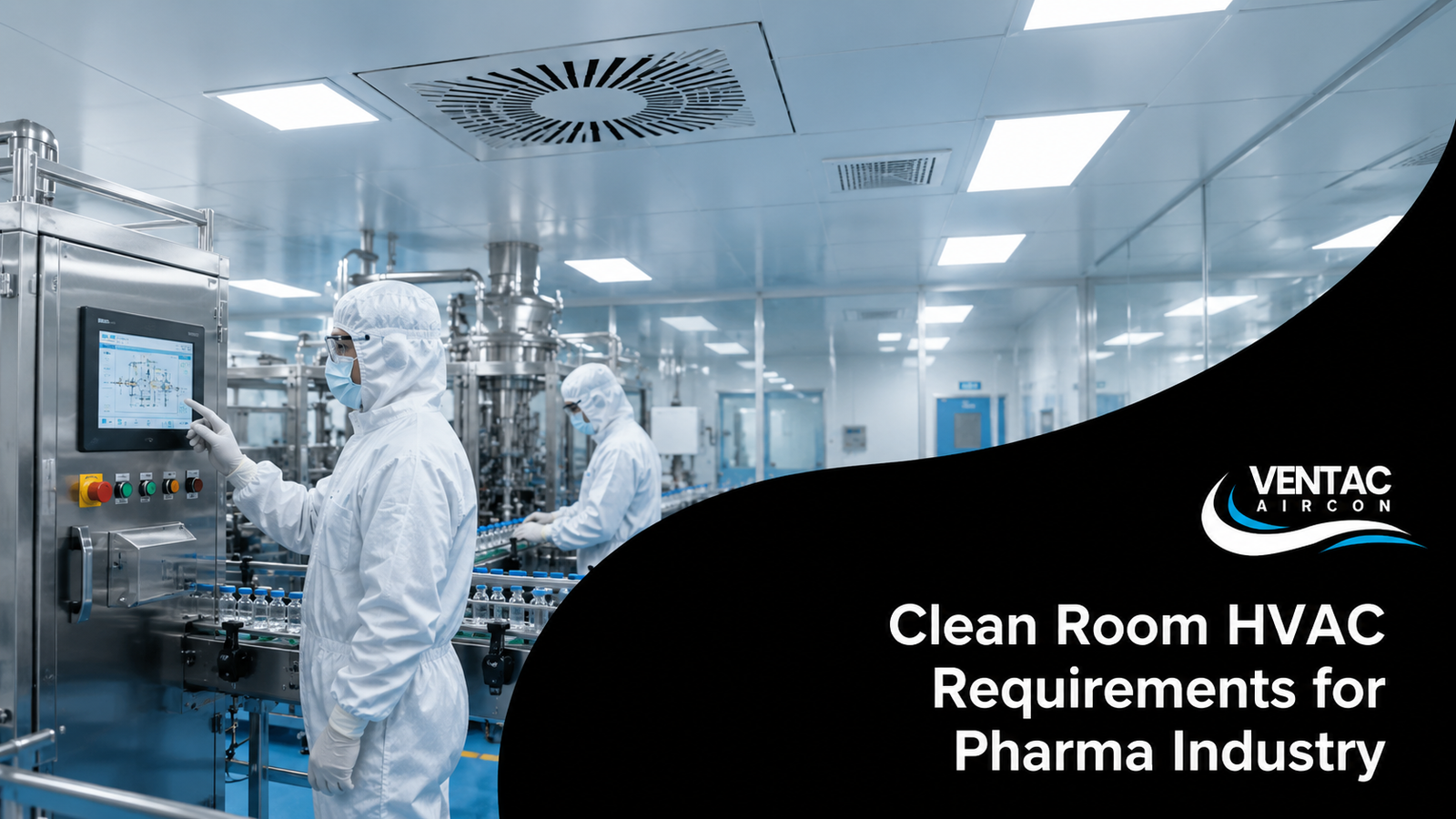
Clean room HVAC requirements for the pharma industry go far beyond ordinary air-conditioning. In pharmaceutical manufacturing, the HVAC system helps control the environment in which medicines, active ingredients and other sensitive products are manufactured, processed or packaged.
Temperature, humidity, airborne particles, pressure differences and air movement can all affect product quality. A poorly designed system may also create contamination risks, production difficulties and costly compliance problems.
For this reason, clean room HVAC design should begin with the manufacturing process, room classification, material flow and applicable quality requirements—not simply the size of the room.
A pharmaceutical facility may include raw-material storage, dispensing rooms, manufacturing areas, sterile processing rooms, packaging spaces and quality-control laboratories. Each area can have different environmental requirements.
This guide explains the key HVAC considerations for pharma clean rooms, including filtration, air changes, pressure control, temperature, humidity, ventilation and validation. It also explains why equipment selection and installation must be coordinated with the facility's quality and engineering teams.
For Ventac Aircon, understanding these requirements is essential when planning HVAC solutions for pharmaceutical and other controlled-environment facilities.
Table of Contents
Why HVAC Is Critical in Pharmaceutical Clean Rooms
What Is a Clean Room HVAC System?
Clean Room Classification and HVAC Design
Air Changes and Airflow Patterns
HEPA Filtration and Air Cleanliness
Temperature and Humidity Control
Pressure Cascades and Contamination Control
Fresh Air and Ventilation Requirements
Equipment Selection for Pharma HVAC
VRV Systems in Pharmaceutical Facilities
VRV Outdoor Unit Installation Considerations
HVAC Validation and Commissioning
Common Clean Room HVAC Design Mistakes
FAQs
Conclusion
Why HVAC Is Critical in Pharmaceutical Clean Rooms
Pharmaceutical manufacturing requires controlled environmental conditions because airborne particles, microorganisms, temperature changes and humidity can affect products and processes.
A clean room HVAC system helps maintain these conditions by controlling the supply, filtration, distribution and removal of air. It also supports the pressure relationships between rooms, which can help reduce the movement of contaminants between different areas.
For example, a dispensing room may require a different airflow strategy from a sterile manufacturing area. A packaging room may have different temperature and humidity requirements from a raw-material storage space.
The HVAC design must therefore reflect the actual process and the level of environmental control required.
It is also important to understand that HVAC is only one part of contamination control. Personnel practices, cleaning procedures, equipment design, material movement and facility layout all contribute to maintaining the required environment.
What Is a Clean Room HVAC System?
A clean room HVAC system is designed to control the air conditions inside a controlled environment. It typically includes air-handling equipment, filtration, ductwork, supply and return-air systems, temperature and humidity controls, and monitoring devices.
Unlike a conventional office HVAC system, a pharmaceutical clean room system must be designed around the room's intended use and environmental requirements.
The system may need to maintain a specific temperature range, humidity level, pressure difference and particle concentration. It may also require dedicated air-handling units, HEPA filters, airlocks and carefully controlled airflow paths.
The design should also consider whether the room is used for sterile or non-sterile manufacturing, whether hazardous materials are handled, and whether the process generates heat, dust or moisture.
These factors influence the choice of equipment, filtration strategy and ventilation arrangement.
Clean Room Classification and HVAC Design
Clean room classification is an important starting point for pharmaceutical HVAC design. The required level of air cleanliness depends on the manufacturing process and the applicable standards or regulatory requirements.
Different areas may require different levels of environmental control. For example, a sterile processing area may have more demanding requirements than a general packaging room.
The HVAC design should therefore begin with a clear understanding of the room classification and the conditions that must be maintained during operation.
It is also important to distinguish between the requirements for the clean room itself and the requirements for the surrounding support areas. A facility may need a pressure cascade between rooms to help control the direction of air movement.
For example, a material airlock may be designed to support controlled movement between a warehouse and a manufacturing area. The HVAC system must work with the architectural layout and operational procedures to maintain the intended airflow direction.
Air Changes and Airflow Patterns
Air changes per hour, or ACH, are commonly used to describe how frequently the air in a room is replaced or recirculated.
However, ACH alone does not determine whether a clean room will meet its required environmental conditions. The airflow pattern, filtration efficiency, room layout and process requirements also matter.
For example, a room with a high air-change rate may still experience contamination problems if the air distribution is poorly designed or if the return-air arrangement creates unwanted air movement.
In pharmaceutical facilities, airflow patterns should be designed to support the intended process and minimize the risk of contamination. The system should also avoid creating turbulence or dead zones where particles may accumulate.
This is why clean room HVAC design should be based on the room's actual requirements rather than using a standard air-change number for every area.
HEPA Filtration and Air Cleanliness
HEPA filtration is an important component of many pharmaceutical clean room HVAC systems. HEPA filters are designed to remove a high proportion of airborne particles from the air passing through them.
The filtration strategy depends on the room classification, process requirements and applicable standards. Some areas may require HEPA-filtered supply air, while others may require different filtration arrangements.
Filter selection is only one part of the design. The system must also provide adequate airflow, maintain the required pressure relationships and allow filters to be inspected and replaced properly.
For example, a clean room may have a ceiling-mounted terminal HEPA filter arrangement with controlled supply-air distribution. The return-air system must be designed to support the intended airflow pattern and avoid unnecessary contamination risks.
Filter integrity testing and other verification activities should be planned as part of the commissioning and validation process.
Temperature and Humidity Control
Temperature and humidity control are important because they can affect product quality, personnel comfort and the performance of manufacturing processes.
Some pharmaceutical processes require tight temperature control, while others may have more flexible operating ranges. Humidity requirements can also vary depending on the materials and products being handled.
For example, excessive humidity may affect moisture-sensitive materials, while low humidity may create static electricity concerns in certain environments.
The HVAC system should therefore be selected and controlled according to the actual process requirements.
In many facilities, temperature and humidity sensors are installed in appropriate locations to monitor the room conditions. The control system should also be capable of responding to changes in load and operating conditions.
A properly designed system should maintain the required conditions without unnecessary energy consumption or excessive equipment cycling.
Pressure Cascades and Contamination Control
Pressure control is one of the most important aspects of pharmaceutical clean room HVAC design.
A pressure cascade helps control the direction of air movement between rooms. In many clean room applications, air is intended to move from cleaner areas toward less clean areas, reducing the risk of contaminants entering the controlled environment.
The exact pressure arrangement depends on the process and facility design. Some applications may require different strategies, especially where hazardous materials or containment requirements are involved.
For example, a manufacturing room may be maintained at a higher pressure than an adjacent corridor, while a material airlock may provide a controlled transition between areas.
The HVAC system must be designed to maintain these pressure relationships under normal operating conditions. Doors, airlocks, exhaust systems and room leakage all affect the pressure balance.
This is why pressure control should be considered during architectural planning rather than treated as an adjustment after installation.
Fresh Air and Ventilation Requirements
Fresh-air ventilation is necessary to maintain appropriate indoor environmental conditions and support the operation of the facility.
The required amount of outdoor air depends on the room use, occupancy, process requirements and applicable standards. Some pharmaceutical areas may also require dedicated exhaust systems to remove heat, moisture, dust or other contaminants.
For example, a dispensing area may require a different ventilation strategy from a general office or a packaging room.
The HVAC design should also consider the relationship between fresh air, recirculated air and exhaust air. In some applications, the system may require dedicated air-handling equipment or specialized exhaust arrangements.
Ventilation should be coordinated with the clean room's pressure cascade and filtration strategy to ensure that the overall system performs as intended.
Equipment Selection for Pharma HVAC
Selecting HVAC equipment for a pharmaceutical facility requires careful consideration of the operating environment and maintenance requirements.
Air-handling units, filters, fans, coils, controls and other components should be selected according to the required performance and the facility's operational needs.
The equipment should also be accessible for inspection, cleaning and maintenance. Poor access can make routine servicing difficult and may increase the risk of contamination during maintenance activities.
For example, an air-handling unit serving a clean room should be located and configured so that filters, coils and other serviceable components can be inspected without unnecessary disruption to the facility.
The design should also consider redundancy where required. Critical pharmaceutical processes may need backup equipment or other measures to reduce the impact of equipment failure.
VRV Systems in Pharmaceutical Facilities
A VRV system can be suitable for certain pharmaceutical support areas, offices, laboratories and other spaces where individual temperature control is important.
However, VRV should not be selected automatically for every clean room application. The system must be evaluated against the required environmental conditions, ventilation needs, filtration strategy and process requirements.
For example, a pharmaceutical office or administrative area may use a VRV system for comfort cooling, while a manufacturing clean room may require a dedicated air-handling system designed specifically for the process.
In some projects, VRV air conditioning may be used for non-critical areas alongside a separate clean room HVAC system.
The key is to ensure that the selected system supports the required environmental conditions and does not compromise the facility's quality or contamination-control strategy.
VRV Outdoor Unit Installation Considerations
Where VRV systems are used in pharmaceutical facilities, VRV outdoor unit installation should be planned carefully.
The outdoor units should be located in a suitable area with adequate airflow, service access and structural support. The installation should also consider the manufacturer's requirements for piping lengths, height differences and equipment spacing.
For example, outdoor units installed on a rooftop or service platform should be arranged so that technicians can safely inspect and maintain the equipment.
The location should also be coordinated with the building's architectural and mechanical services. Poor planning can create difficulties with access, drainage, electrical connections or refrigerant piping.
For pharmaceutical projects, these considerations are particularly important because maintenance activities may need to be coordinated with production schedules and facility access controls.
HVAC Validation and Commissioning
HVAC validation is an important part of pharmaceutical facility development.
The purpose of validation is to demonstrate that the HVAC system can consistently achieve the required environmental conditions under the intended operating conditions.
Commissioning typically involves checking equipment operation, airflow, temperature, humidity, pressure relationships and other relevant parameters.
Depending on the facility and applicable requirements, the process may also include filter integrity testing, air balancing, particle monitoring and other verification activities.
The exact validation approach should be defined by the project team and quality professionals.
A well-planned commissioning process helps identify problems before the facility enters routine production. It also provides documentation that can support future maintenance, troubleshooting and regulatory inspections.
Common Clean Room HVAC Design Mistakes
One common mistake is designing the HVAC system based only on room size. Pharmaceutical clean rooms require more than a simple cooling calculation because airflow, filtration, pressure and environmental control are equally important.
Another mistake is failing to coordinate HVAC with the building layout. Poorly planned ductwork, airlocks, equipment locations or maintenance access can create problems during installation and operation.
Some projects also underestimate the importance of commissioning and validation. A system may appear to be operating correctly but still fail to maintain the required environmental conditions.
A further issue is selecting equipment without considering the actual process requirements. For example, a comfort-cooling system may not be suitable for a controlled manufacturing area that requires dedicated filtration and pressure control.
These mistakes can be avoided by involving experienced HVAC engineers, MEP consultants and quality professionals early in the project.
FAQs
1. What are the main HVAC requirements for pharmaceutical clean rooms?
The main requirements typically include control of temperature, humidity, airborne particles, airflow, pressure differences and ventilation. The exact requirements depend on the room classification and manufacturing process.
2. Is HEPA filtration necessary in every pharma clean room?
Not necessarily. HEPA filtration requirements depend on the room classification, process and applicable standards. Some areas may require HEPA-filtered supply air, while others may have different filtration needs.
3. What is the role of pressure control in clean rooms?
Pressure control helps manage the direction of air movement between rooms. It can reduce the risk of contaminants entering cleaner areas when the pressure cascade is designed and maintained correctly.
4. Can VRV systems be used in pharmaceutical facilities?
Yes, VRV systems can be used in suitable applications such as offices, support areas and some laboratories. However, critical clean rooms may require dedicated HVAC systems designed for their specific environmental requirements.
5. Why is humidity control important in pharmaceutical manufacturing?
Humidity can affect materials, product quality, static electricity and personnel comfort. The required humidity range depends on the process and the materials being handled.
6. What is HVAC validation in a pharma facility?
HVAC validation is the process of demonstrating that the system can consistently achieve the required environmental conditions. It may include testing of airflow, temperature, humidity, pressure and filtration performance.
7. How important is air balancing in clean room HVAC?
Air balancing is important because it helps ensure that the system delivers the intended airflow to each area. It also supports the required pressure relationships and environmental conditions.
8. What should be considered when selecting HVAC equipment for pharma clean rooms?
Equipment selection should consider the required environmental conditions, filtration, airflow, maintenance access, reliability, energy efficiency and the specific needs of the manufacturing process.
Conclusion
Clean room HVAC requirements for the pharma industry must be based on the actual manufacturing process, room classification and environmental control needs.
A well-designed system should manage temperature, humidity, airflow, filtration and pressure relationships while supporting reliable operation and effective maintenance.
VRV systems can be useful in suitable pharmaceutical applications, but critical clean rooms often require dedicated HVAC solutions designed around the process and contamination-control requirements.
The most important step is to involve experienced HVAC engineers, MEP consultants and quality professionals early in the project. Proper design, installation, commissioning and validation can help ensure that the HVAC system supports the facility's operational and quality objectives.
Ventac Aircon provides HVAC design, installation and commissioning services for commercial and industrial applications, including controlled-environment and pharmaceutical facilities.

 Türkçe
 English
 Deutsch
 Russian