


 İnstagram
 Facebook
How Data Analytics Is Used in Supply Chain Management?
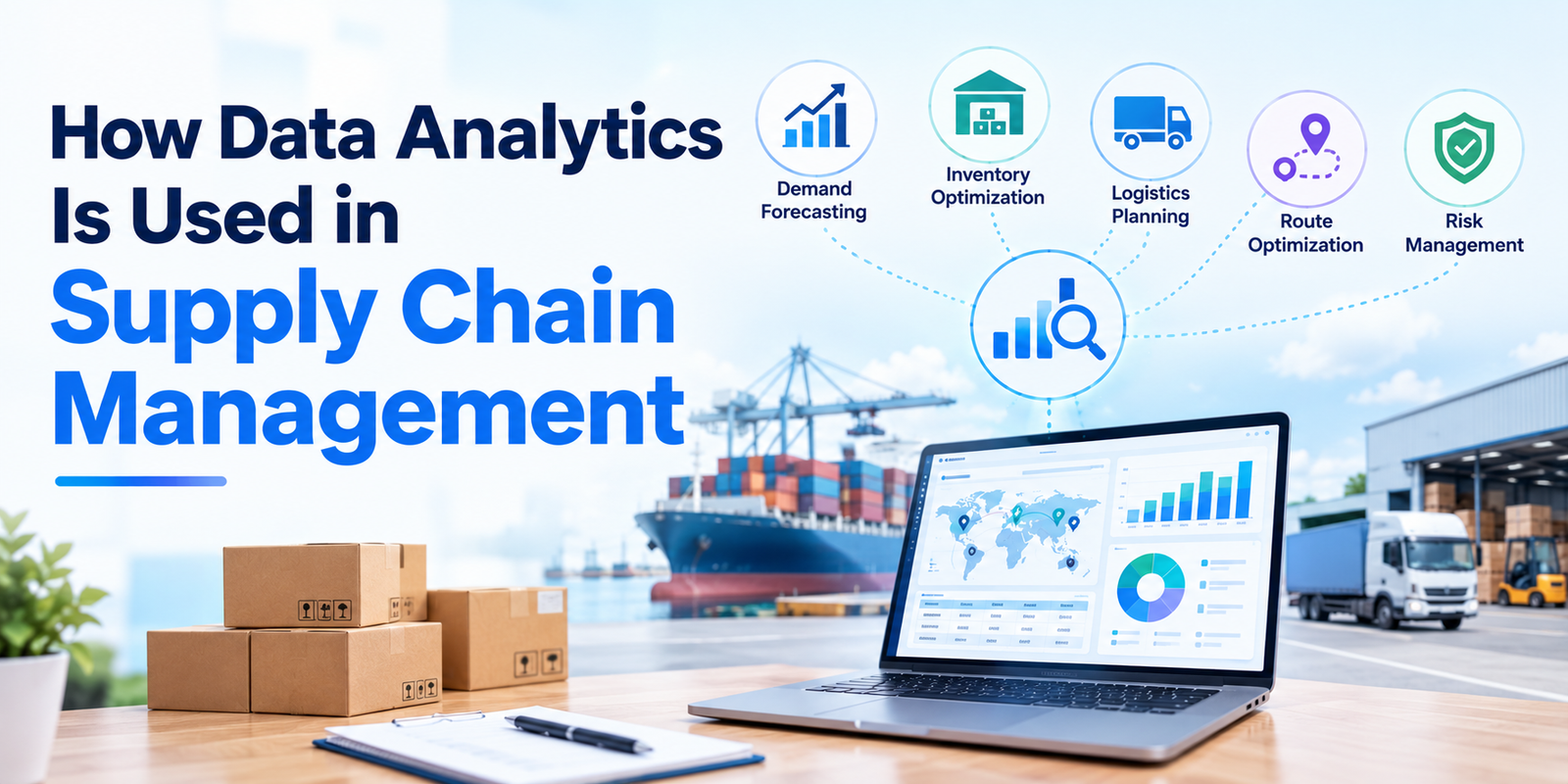
Think about the journey of a product you order online. Before it reaches your doorstep, it may move through suppliers, factories, warehouses, transportation networks, and delivery centers. Behind all of this, there is a huge amount of information being generated every day.
This is where data analytics becomes useful. For someone learning through a Data Analytics Course in Chennai, supply chain management is a great example of how data can be used to solve practical business problems. Companies can study sales, inventory, supplier, transportation, and customer data to make better decisions and respond faster when something changes.
But how exactly is analytics used in supply chain management? Let’s look at some of the most important applications.
What Is Supply Chain Analytics?
Supply chain analytics means collecting and analyzing information from different stages of the supply chain to understand what is happening and make better decisions.
The data can come from sales systems, inventory platforms, warehouses, transportation systems, suppliers, ERP software, and even external sources. When this information is analyzed together, companies get a clearer view of their operations.
Instead of simply asking, “What happened last month?”, companies can also ask:
-
What caused the delay?
-
Why did demand suddenly increase?
-
Which supplier is performing better?
-
What products might be needed next month?
-
Where are we holding too much inventory?
That shift from simply looking at past information to using data for better planning is one of the biggest benefits of analytics.
1. Forecasting Customer Demand
One of the most important uses of analytics in supply chains is demand forecasting.
Companies need to estimate how much of a product customers are likely to buy. If they order too little, products may go out of stock. If they order too much, money can get stuck in unsold inventory.
Analytics can examine historical sales, seasonal patterns, promotions, pricing changes, and other relevant signals to estimate future demand. Predictive analytics and machine learning can also be used when businesses have large and complex datasets.
For example, a clothing retailer can analyze previous summer sales to estimate how many T-shirts it may need for the upcoming season.
2. Managing Inventory Better
Keeping the right amount of stock is not as simple as it sounds.
Too much inventory increases storage and holding costs. Too little inventory can lead to missed sales and unhappy customers.
Data analytics helps companies understand which products are moving quickly, which ones are sitting in warehouses, and when stock needs to be replenished.
Businesses can analyze sales velocity, inventory levels, supplier lead times, and demand patterns to make more informed stocking decisions.
The goal is simple: have the right products available at the right time without unnecessarily carrying excess stock.
3. Monitoring Supplier Performance
Suppliers play a major role in supply chain operations. A supplier that regularly delivers late can affect production, inventory, and eventually customer orders.
Analytics can help companies compare suppliers using factors such as:
-
Delivery time
-
Product quality
-
Order accuracy
-
Pricing
-
Return rates
-
Lead-time consistency
Instead of relying only on assumptions or occasional reviews, managers can use actual performance data to identify reliable suppliers and investigate recurring problems.
This can also help companies identify supplier risks before they become major disruptions.
4. Improving Transportation and Delivery
Transportation is another area where analytics can make a noticeable difference.
Companies can analyze delivery times, fuel usage, routes, vehicle capacity, traffic conditions, and transportation costs to understand where improvements are possible.
For example, if a company notices that a particular delivery route consistently takes longer than expected, it can investigate alternative routes or schedules.
Analytics can also help businesses plan shipments more efficiently and reduce unnecessary transportation costs. Supply chain analytics is commonly used for logistics and route optimization because transportation decisions involve many changing factors.
5. Improving Warehouse Operations
Warehouses generate a lot of useful data.
Companies can analyze information about incoming goods, outgoing orders, storage locations, picking times, product movement, and order volumes.
This can reveal questions such as:
-
Which products are picked most often?
-
Which warehouse areas are busiest?
-
How long does it take to process an order?
-
Are some products stored inefficiently?
-
When are order volumes highest?
Once these patterns are visible, warehouse managers can improve storage arrangements, staffing, and daily workflows.
6. Identifying Supply Chain Risks
Supply chains can be affected by many unexpected events, including supplier problems, transportation delays, sudden demand changes, or shortages.
Analytics cannot prevent every disruption, but it can help companies identify warning signs earlier.
By monitoring supplier performance, inventory levels, delivery patterns, and other operational indicators, businesses can recognize potential risks and prepare alternative plans.
This makes supply chain management more proactive instead of waiting until a problem has already affected customers.
7. Reducing Supply Chain Costs
Every stage of a supply chain has costs attached to it.
There are purchasing costs, storage costs, transportation expenses, production costs, and costs associated with returns or damaged products.
Analytics helps companies identify where money is being spent and where unnecessary expenses may exist.
For example, a company might discover that certain products are being stored for too long or that some delivery routes are consistently more expensive.
Once these patterns are identified, managers can investigate the reasons and make changes.
8. Improving Customer Satisfaction
Customers may never see the supply chain directly, but they definitely notice when something goes wrong.
Late deliveries, unavailable products, incorrect orders, and damaged shipments can quickly affect customer satisfaction.
By analyzing order patterns, delivery performance, inventory availability, and customer behavior, companies can improve their ability to meet customer expectations.
Better supply chain decisions can ultimately lead to faster deliveries, fewer stockouts, and a smoother customer experience.
9. Supporting Real-Time Decision Making
Traditional reports may tell a company what happened yesterday or last week. Modern analytics can provide a much more current view of operations.
With data coming from systems such as warehouses, transportation platforms, sales channels, and IoT devices, companies can monitor supply chain activities more closely.
This allows teams to react faster when inventory levels change, shipments are delayed, or demand suddenly increases. Modern supply chain analytics increasingly combines descriptive, predictive, and prescriptive approaches to support operational decisions.
What Skills Are Useful for Supply Chain Analytics?
A data analyst working with supply chain information may use several skills together.
SQL can help retrieve information from databases. Excel can be useful for calculations and quick analysis. Python can support more advanced data analysis and forecasting. Tools such as Power BI and Tableau can turn complex supply chain data into dashboards that managers can understand easily.
Most importantly, analysts need to understand the business problem behind the numbers.
A dashboard is useful, but knowing why a shipment is delayed or why inventory is increasing is what makes the analysis valuable.
Final Thoughts
Data analytics has become an important part of supply chain management because companies need more than basic reports to manage complex operations. From forecasting demand and controlling inventory to monitoring suppliers, improving logistics, reducing costs, and identifying risks, analytics can support decisions across the entire supply chain.
For aspiring analysts, supply chain management also offers plenty of opportunities to work with real business problems and large datasets. Building practical skills in SQL, Excel, Python, visualization, and analytical thinking can help you understand how data connects with everyday business decisions.
At Qmatrix Technologies, learning data analytics with practical examples and real-world scenarios can help learners understand not just the tools, but how those tools are actually used to solve business problems.

 Türkçe
 English
 Arabic
 Deutsch